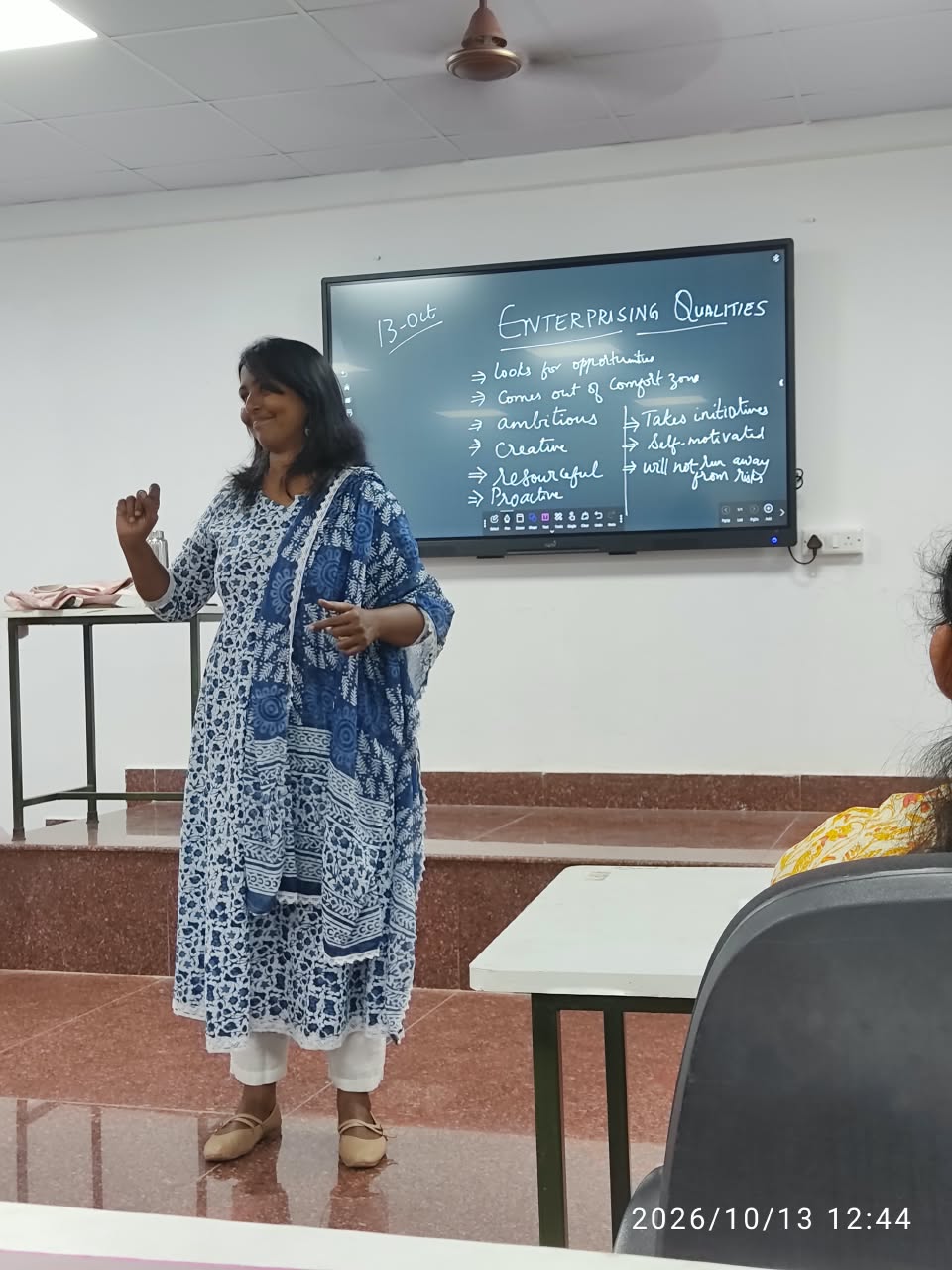
Raising two teenagers has given me more valuable insights into leadership than any book ever could.
After all, adolescents are adults in the making. Parenting them for the first time is tricky. By the time you have navigated raising one, you have a few tricks up your sleeve!
Leadership is a way of life. It isn’t developed overnight. It evolves through the little responsibilities we take on, the decisions we make, and the challenges we learn to navigate. We gradually develop the qualities of a leader. That is why leadership is a life skill.
How do I relay this to GenZ adolescents?
Talking about leadership and accountability in an Engineering classroom full of teenagers can be tricky: you have to hold their attention, make it relatable and connect it to familiar instances, keep them interested, avoid the usual gyan, and also encourage self-reflection.
As if that’s not enough, design an engaging activity with all these parameters,… not just another activity, one that brings a WOW factor that ties it all up for a tiny reflective takeaway!
A simple question did the magic.
“How many of you fill the water bottles for the fridge?”
“Have you ever helped your mom ‘without being asked’ in the kitchen when her helper was unavailable?”
This was unplanned. Not in my lesson plan. A 100% Agmark-certified “Lightbulb moment”! Even after weeks, I am still wondering how I came up with that. It must be the “Mom training” I’ve been through for over a decade. No other plausible reason! 😂
At the core of it all, leadership skills begin at home! It is in the little things we do as children that lay the foundation. Through everyday errands, lending a helping hand when someone is sick, curiosity to try, and collaborating for festival cooking, we gradually evolve from following instructions to taking initiatives to making independent decisions. If you look closely, this is the very trajectory of developing leadership.
And where else do we see these qualities in action? At the workplace!
The same teenager who learns to fill a water bottle without being reminded may grow into an employee who notices what needs to be done without waiting for instructions.
A household task teaches him the importance of ownership.
A family outing helps her to anticipate, organise, and make decisions.
Mistakes → accountability.
Responsibility → doing better.
These are all very much workplace behaviours.
Initiative – Ownership – Accountability – Problem-solving – Decision-making.
We don’t necessarily teach leadership by telling children to become leaders. We nurture it by giving them opportunities to take responsibility. It teaches them that its not in the titles and authority but towards ownership, responsibility, and action.
Now the next challenge was, how do I make it impactful that stays in their subconscious…sort of a prolonged activity (behavioural change)?
That’s where real change is. With the Mom hat on, it wasn’t so difficult after all. Fast forward, I am noticing changes. Its a start, they are self-consciously reflecting. I am delighted I was able to sow a seed of change.
A home is the fail-safe space where youngsters make mistakes and learn accountability before they meet the world.
As educators, when we connect these everyday experiences to real-life situations, they see themselves in the mirror to recognise that leadership isn’t something they have to wait for.
They are already practising it. They just have to be conscious of its presence in everything they do.